

REPORT: Grocery Purchasing Power Has Improved. The Affordability Mindset Remains.


The results are in. According to our first-ever Affordability Tracker report, despite meaningful gains in grocery purchasing power since 2023, consumers continue to prioritize value, look for promotions, and scrutinize purchases more carefully than before the inflationary period.
In future editions, the Tracker will provide an ongoing view of grocery purchasing power, shopper behavior, and the forces shaping retail performance.
In recent years, affordability has been one of the most influential forces shaping consumer behavior.
With grocery prices rising significantly, shoppers have changed how they shop, what they buy, and how they define value.
But affordability is about more than prices alone. It’s really about the relationship between what consumers spend and what they earn.
This edition of the Affordability Tracker focuses specifically on grocery affordability by examining the relationship between the cost of Acosta Group’s Typical Stock-Up Trip and median hourly earnings in the United States.
The findings reveal an important tension: grocery affordability has improved since its 2023 low point, yet many of the value-oriented shopping behaviors people developed during the inflationary period remain firmly in place.
Key Findings
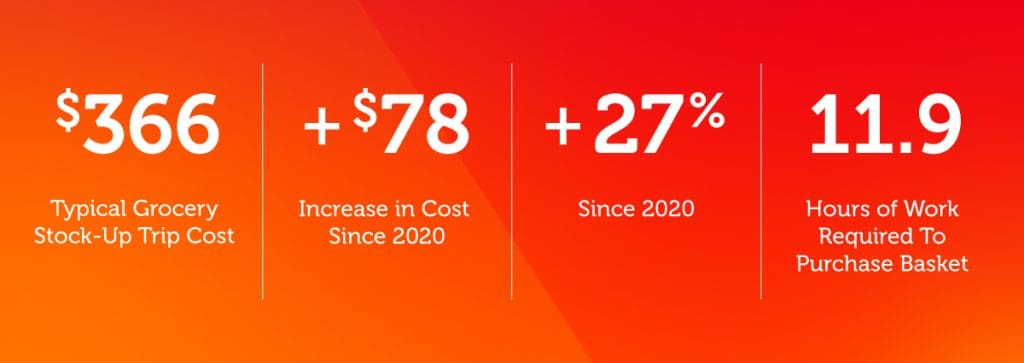
Finding 1: The Typical Stock-Up Trip Costs Nearly $80 More Than It Did in 2020
Grocery prices remain substantially higher than pre-pandemic levels despite moderating inflation.
Finding 2: Wage Growth Boosted Purchasing Power (for a Time)
Earnings growth helped offset a portion of the affordability pressure created during the inflation surge.
Finding 3: The Affordability Recovery Has Leveled Off
The affordability recovery that began in 2023 appears to be entering a period of stabilization.
Finding 4: Inflation-Era Shopping Habits Are Proving Sticky
Consumers continue exhibiting many of the value-oriented behaviors they developed during the inflationary period, suggesting they’re making careful trade-offs even as affordability remains stronger than it was during the peak inflation years.
Finding 5: The Affordability Mindset Is Outlasting the Affordability Recovery
Improving affordability has not fully changed how consumers think about spending and value.
“Grocery purchasing power and consumer behavior are no longer moving in parallel.”
Why It Matters
The report suggests that improving affordability alone may not be enough to restore pre-pandemic shopping behavior.
Consumers have adapted to a marketplace defined by higher prices and many of the habits developed during that adaptation now appear increasingly durable.
For retailers and brands, future growth may depend less on waiting for economic conditions to normalize and more on understanding how consumer expectations around value have changed.
The competitive challenge is no longer simply helping consumers manage higher prices. It’s helping consumers feel confident that purchases deliver meaningful value.
What’s Inside the Report
Explore shopper behavior insights and implications for retailers and brands in the inaugural Acosta Group Affordability Tracker.
- The cost of Acosta Group’s Typical Stock-Up Trip
- Grocery affordability trends from 2020-2026
- The relationship between wages and grocery purchasing power
- Inflation-era shopping behaviors that continue today
- Implications for retailers and brands
- The methodology behind the Affordability Tracker


