

What’s in Store at Google?


How Mosaic Is Helping Retail Feel Human Again
Walk into most retail stores and you’ll see an older model at work. A layout built for speed and moving shoppers forward. The goal: convert traffic as quickly as possible.
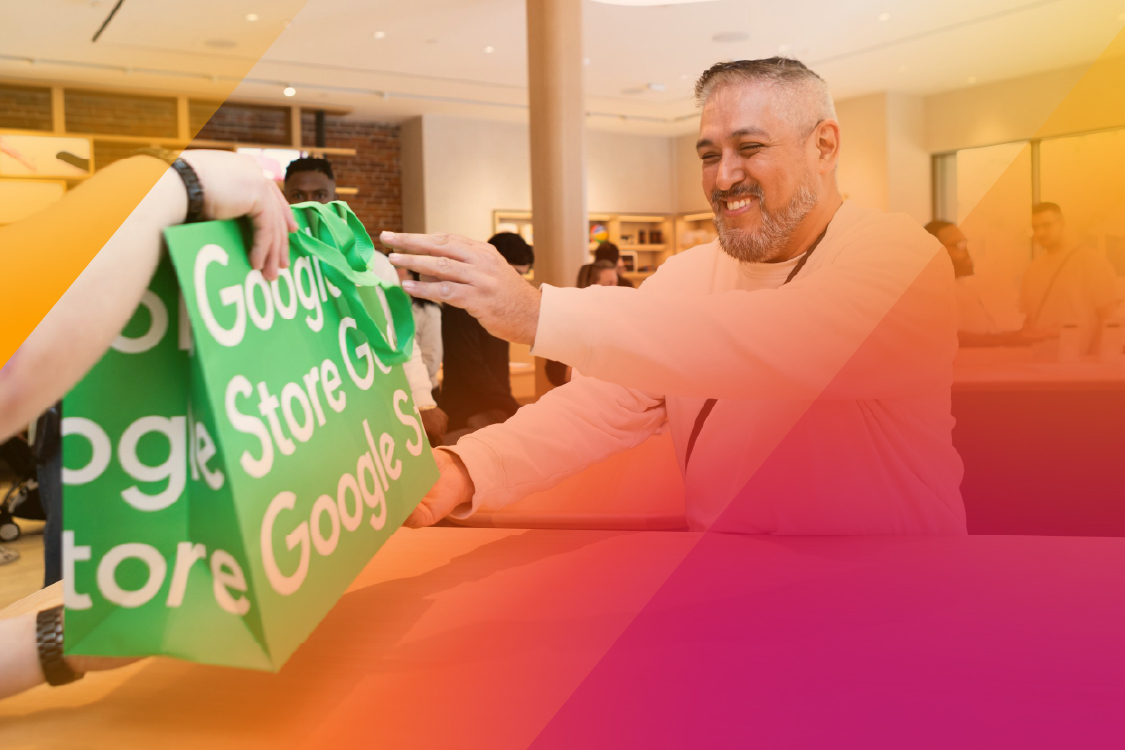
Wander inside a Google Store like the one in New York’s Chelsea neighborhood and that model evaporates. Nobody’s rushing around. Shoppers aren’t grabbing items and dashing out the door. They’re talking, testing, exploring, and often leaving without buying a single product.
“Many of our visitors are just browsing,” says Sara Cavolo, Senior Director at Mosaic, the Acosta Group agency that operates the Google Store program. “They’re trying to understand what the brand can actually do for them.”
It’s a signal that the role of retail is shifting, but why?
What Today’s Shopper Wants
Customers have choices — endless choices. They’re not looking for more of them; they’re looking for meaning.
When it comes to selecting a product or brand, people are asking how it fits into their lives, how it compares to what they already use, and whether it’s worth the switch. Decisions like these rarely happen all at once.
That’s where the in-store experience comes in.
“Interactions can take five minutes or up to an hour,” Cavolo says. “It really depends on what the customer needs.”
What sounds like inefficiency in traditional retail is a win for Google.
“We go through a series of questions and build a solution for the guest,” Cavolo says. “It’s not commission-based selling. It’s relationship building.”
Helping a customer transfer data, set up a device, or troubleshoot an issue requires more than product knowledge. It requires judgment, patience, and the ability to guide someone through a process that can feel more personal than technical.
“There’s a lot of trust involved,” says Cavolo. “You’re handling things that really matter to people.”
That shift changes the role of the associate. Instead of closing sales, they’re helping people navigate uncertainty. They’re clarifying trade-offs and building confidence in decisions that may not be made until later.
Not every interaction ends in a purchase, and that’s just fine. Interactions are meant to move the customer forward, even if the sale isn’t immediate.
Associates must now take conversations from scripted to situational — and that takes real skill.
The Work Behind the Welcome
What the customer sees is only part of what’s happening inside the store. Beneath the casual vibe is a tight operation that delivers consistency at scale.
“We do everything end to end,” Cavolo says. “From hiring to training to operations.”
With ten Google Stores open across the United States, and more on the way, Mosaic handles staffing, merchandising, inventory coordination, and customer engagement to make the experience feel seamless from one store to the next.
The model is anything but static. It evolves continuously through direct feedback and operational insight.
“We’re always in conversation with Google,” Cavolo says. “We’re sharing what’s working and what customers are saying.”
Ongoing feedback allows the store to adjust in real time, rather than relying on periodic resets. And it makes one thing clear: modern retail environments are not fixed. They’re in regular flux and require constant fine-tuning.
Training isn’t a one-time event. It’s ongoing because the job demands it. Success isn’t measured by traditional retail metrics alone. Service and guest experience matter too.
Service plays a major role in bringing customers back, reinforcing that long-term value is built over time, not just at the moment of purchase.
“We’re sitting in the high 80s for Net Promoter Score (NPS), and even higher for repair,” Cavolo says. “Repair is loyalty all day long.”
Why Physical Retail Is Different This Time
As more direct-to-consumer or digitally native brands expand into physical retail, the gap between concept and execution can be wide.
“There are a lot of brands that want to go into retail and don’t know how to do it,” Cavolo says. “Especially brands that are only online.”
Designing a store is one challenge. Running it effectively and at scale is another. That second part tends to get underestimated.
“Whether it’s a pop-up or a permanent location, we can help brands test, build, and scale,” says Cavolo.
The return to physical retail is not a return to the past. It’s a move toward something more complex and operationally demanding. Stores are no longer defined by what they look like. They’re defined by the experience they offer.
That means immersive environments that draw shoppers in, pivot quickly to meet their needs, and provide value far beyond product function.
Across categories, formats, and markets, Acosta Group helps brands build retail experiences that people want to step into — and come back to.


